
The dream is intoxicating and you have seen the photos: a whitewashed house above a blue bay, bougainvillea spilling over a terrace, a price that seems almost too gentle to be real. The Harrises, a composite couple assembled from the real patterns of Americans who have chased exactly this fantasy onto a Greek island, bought their house and moved into the postcard. A year later they are glad they did, but they are also candid about something the glossy articles never show: the real year-one budget was a long way from the romantic number in their heads. Island life, it turns out, has a whole layer of costs that the brochure leaves out. Here is the honest accounting of what their first year on a Greek island actually cost, the buying fees, the renovation, the island premiums, the taxes, the American-only costs, and the winter, with every figure a representative illustration rather than any single real ledger, so you can finally see the budget nobody shows you. It is a wonderful dream, and it costs a good deal more than the photo admits.
What follows is why the purchase was the easy part, the renovation that costs more on an island, the taxes and premiums nobody factors in, the two costs Americans uniquely carry, and what year one really added up to.
The Purchase Was the Easy Part
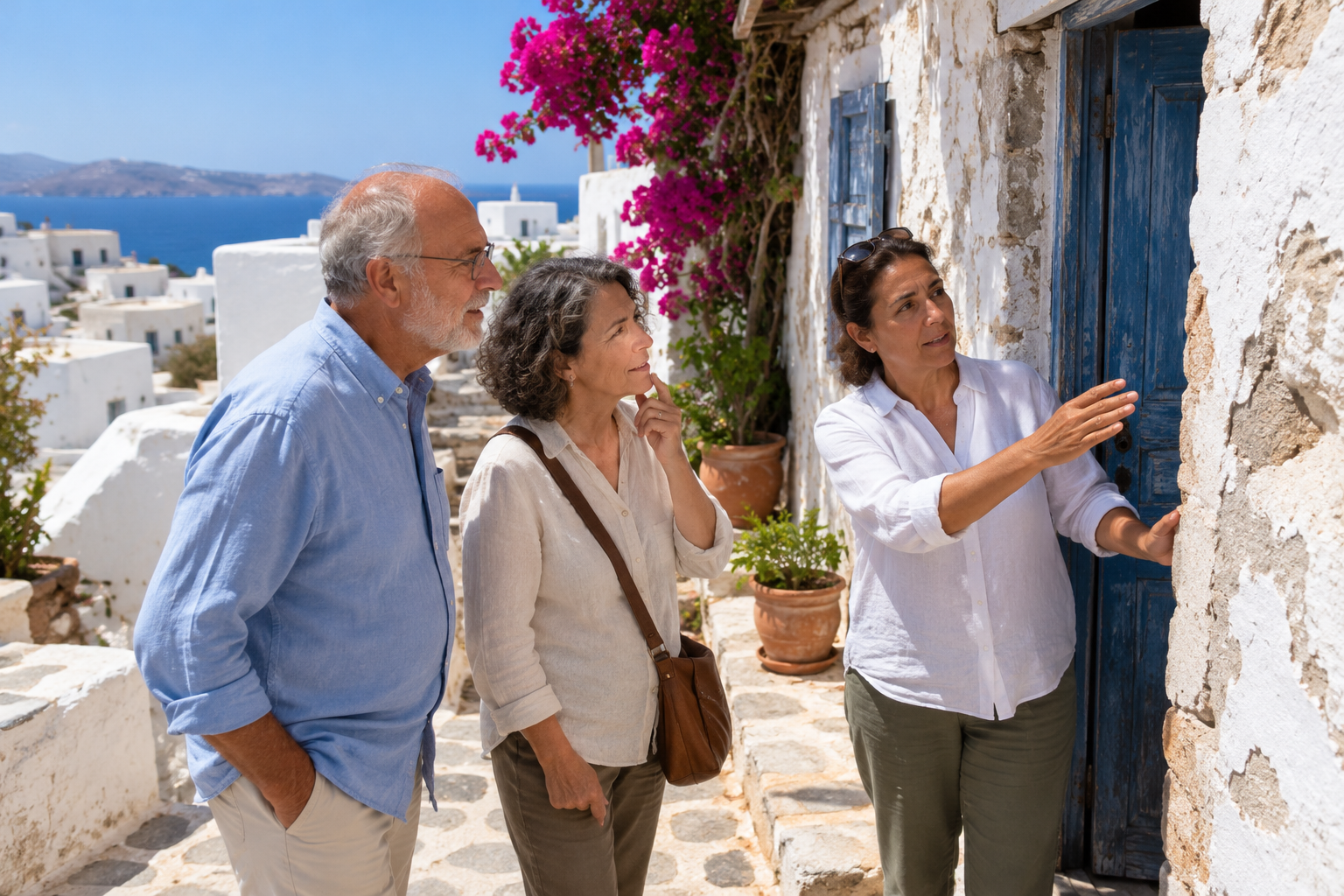
Start with the good news, because it is genuinely good: on many Greek islands, away from the glamour of Mykonos and Santorini, you really can still find an older stone house for a price that would not buy a garage in coastal California. The Harrises found theirs on a quieter island, an old house that needed work, at a price per square meter that felt almost unreal to American eyes. That part of the dream is genuinely true, and it is exactly what draws people in and sets the whole fantasy in motion, because a number that low makes you start imagining the terrace and the sunsets before you have thought through anything else. The low purchase price is real; it is just the smallest piece of the real story.
But the purchase price was only the start of the buying costs. On top of it came the unavoidable layer of mandatory transaction expenses that every Greek property purchase carries: a transfer tax of around three percent, plus notary fees, legal fees, agent commission, land-registry and registration costs, and the small administrative charges for things like obtaining the Greek tax number every foreign buyer needs, which together add roughly ten percent above the purchase price before a single repair is made or a stick of furniture bought. It is money gone the moment the deed is signed, and it is the easy, predictable part of what is to come. There is also an important piece of timing to watch, because Greece has announced a plan to sharply raise the transfer tax for certain non-EU buyers, potentially to a far higher rate, from mid-2027, which could make buying as an American dramatically more expensive once it takes effect, so anyone considering this should understand the current rules and the looming change before they commit. Even so, these buying costs, while real, were the predictable and manageable part. It was everything that came after the purchase that quietly rewrote the budget.
The Renovation That Costs More on an Island

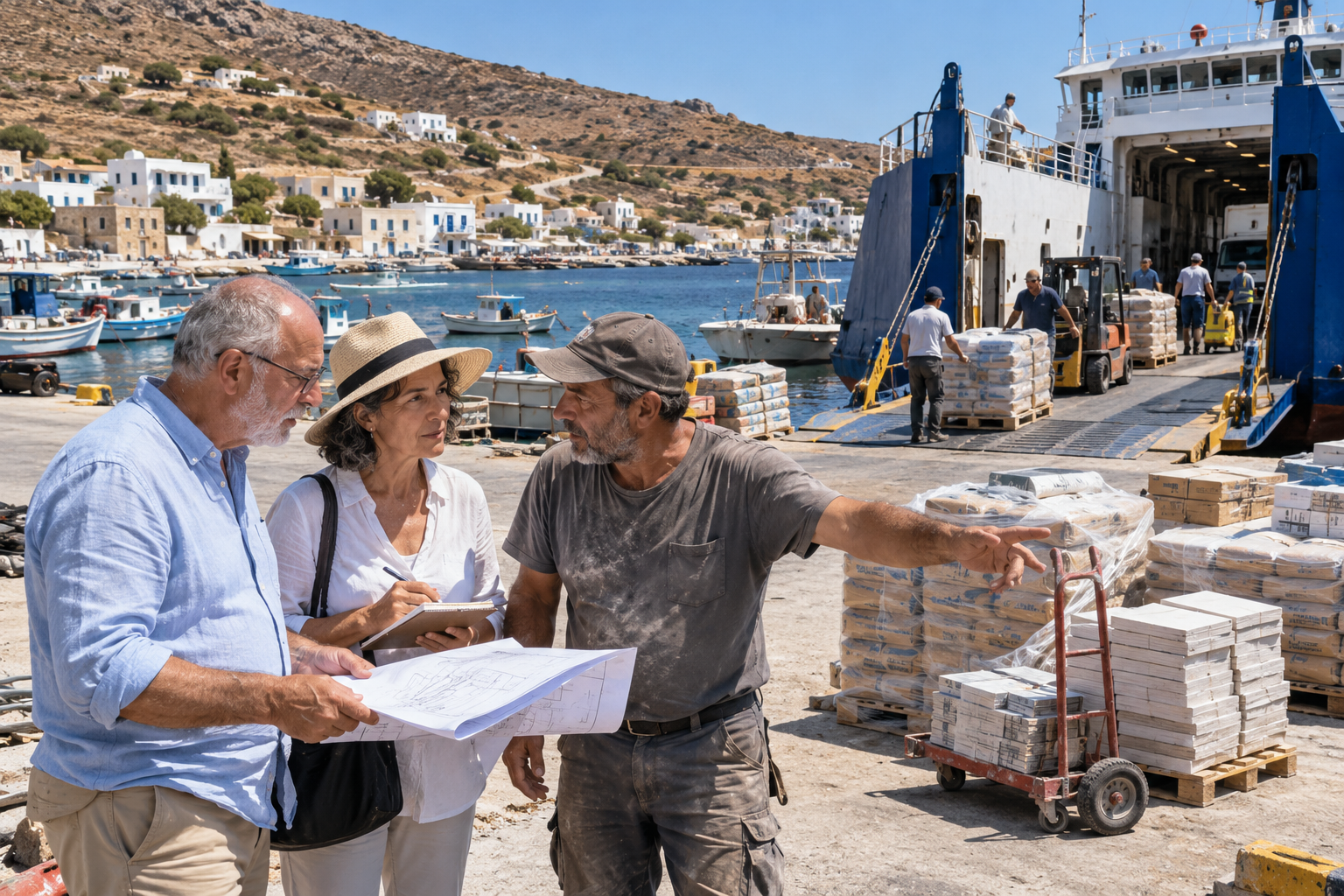
Here is the first place the island budget diverges hard from the mainland one, and it is the single biggest surprise for most buyers: renovation on an island costs more, often much more, than the same work on the mainland. The reason is simple once you think about it. On a Greek island, almost everything arrives by ferry, materials, fixtures, tradespeople, sometimes even the water, and every bit of that freight and travel adds cost. An old island house bought cheaply is cheap precisely because it needs work, and the Harrises, like nearly everyone who buys one, discovered that fixing it up was the dominant line in their entire first-year budget.
Industry estimates bear this out: buying costs alone add around ten percent to a Greek property, but a light renovation can push the total fifteen to twenty-five percent above the purchase price, and a heavy renovation thirty to fifty-five percent or more, with island locations landing at the higher end because of those labor and material premiums. In practice, the Harrises found their renovation cost as much as the house itself, and it took longer than planned, as hidden problems surfaced and ferry schedules slowed every delivery. This is the universal truth of cheap-old-house dreams everywhere, amplified by the sea: the bargain purchase price is the lure, and the renovation is where the real money goes. Anyone enchanted by an affordable island house has to understand that the sticker price is the entry fee; the renovation is the actual cost of a livable home.
The Taxes and Premiums Nobody Factors In
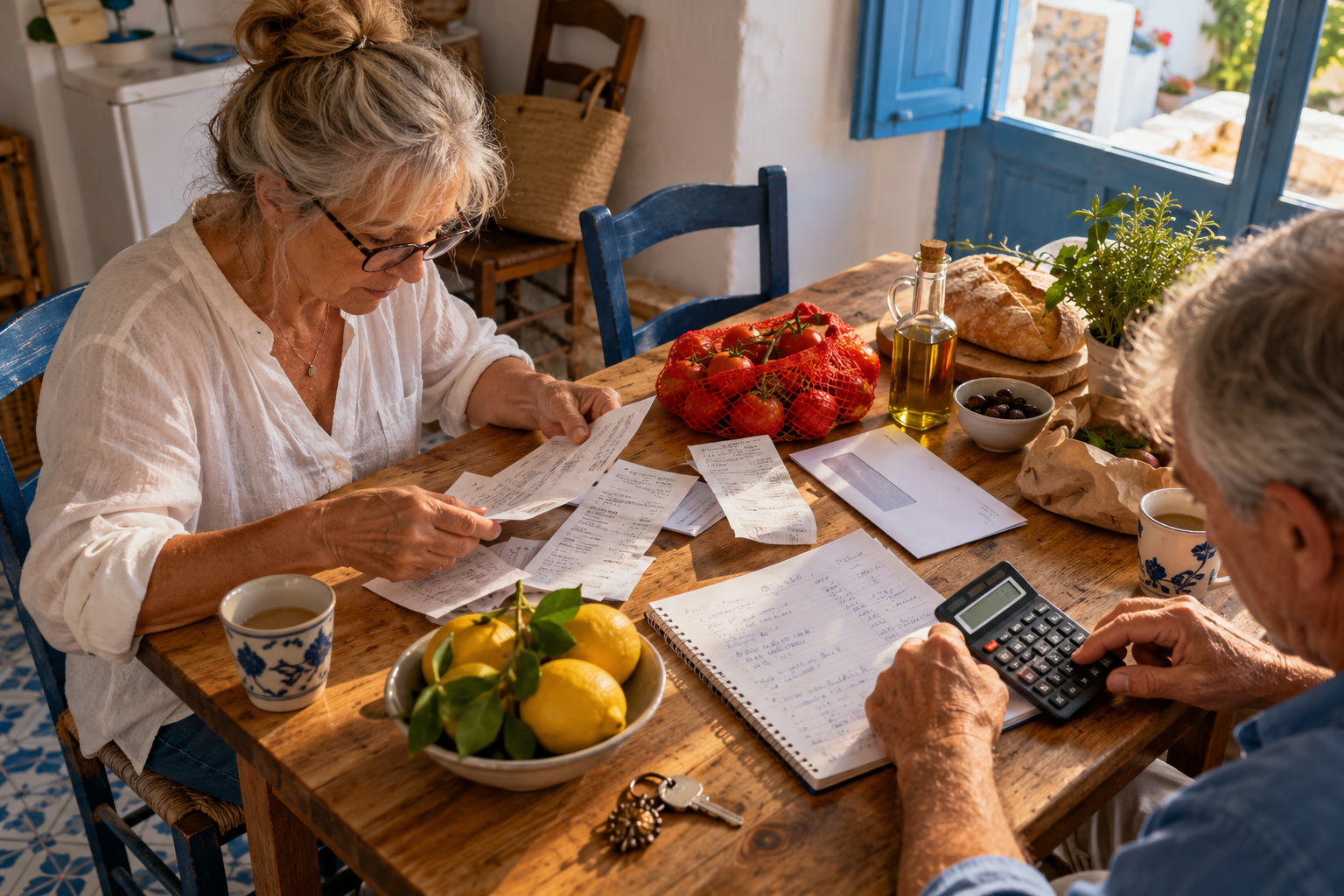
Beyond the one-time costs, owning and living on a Greek island brings a stack of ongoing expenses that the dream never mentions, and they add up relentlessly. First is the ownership tax: Greece levies an annual property tax called ENFIA on every owner, plus a small municipal duty, so the house keeps costing money every year whether or not anyone is in it. For a modest house the ENFIA is not enormous, a few hundred euros a year for something small, but it is a permanent annual line that the fantasy budget tends to forget entirely, one of many little recurring costs that quietly accumulate into a real number over a year. Owning abroad is never a one-time purchase; it is a standing relationship with a tax office.
Then there is the island premium on daily life, which is subtle but constant. Because everything on an island arrives by ferry, groceries routinely cost ten to twenty percent more than on the mainland, so the same shopping basket that looks cheap in an Athens suburb costs noticeably more on a small island. Utility costs have been climbing steadily across Greece as well, with housing and energy costs up by nearly ten percent year over year in recent figures, so running the house, heating its stone rooms through a damp island winter, cooling them in the fierce summer, and keeping the lights on, costs meaningfully more than the older cost-of-living guides still floating around online would suggest. Whatever a house cost to run last year, it costs more this year. Add the ordinary upkeep of a house in a harsh sea climate, where salt and wind are hard on everything, and the result is that daily island living quietly runs higher than mainland living, undercutting the very affordability that drew the Harrises in the first place. None of these costs is huge on its own, but together they form a steady upward pressure on the budget that the romantic version simply does not include.
The Two Costs Americans Uniquely Carry
On top of everything a Greek buyer would face, an American carries two extra costs that are easy to overlook and genuinely consequential, and the Harrises had to plan for both. The first is healthcare. Medicare does not cover you outside the United States, so retiring to a Greek island means solving medical care separately, whether by keeping paying for Medicare to preserve the option of flying home, buying private or public Greek coverage, or some combination. And on a small island the problem is sharper still, because serious or specialist care often is not available locally and means a ferry or even a medical flight to a larger island or to Athens, which makes healthcare both a cost and a logistical reality that favors larger, better-equipped islands over tiny romantic ones.
The second surprise is tax. Greece offers a well-publicized flat tax of seven percent on foreign pension income for retirees who qualify, which sounds like a gift, and for some it is. But here is the honest catch that trips people up: that seven percent is a tax they would often not owe at all back home, so for a couple living mostly on a modest Social Security income, the Greek flat tax can actually add thousands of dollars a year to their tax bill rather than saving them money. It is a genuine benefit for higher-income retirees with large foreign pensions, but for a middle-income couple it can be a net cost, and assuming it is automatically a saving is one of the most common and expensive mistakes Americans make when they run the Greek numbers. Both of these costs, the healthcare gap and the pension tax, have to be budgeted for deliberately and in advance, because neither of them shows up anywhere in the cheerful cost-of-living figures that lure people in, and both can run to several thousand dollars a year. An American who plans only around the local living costs, and forgets these two, can find the Greek math quietly turning against them.
How the Island You Pick Changes the Whole Budget
One thing the Harrises learned, and that anyone chasing this dream should absorb before they fall for a listing, is that there is no single Greek island budget, because the island you choose shapes almost every number on this page. The romantic math pulls you toward the smallest, quietest, cheapest islands, where the houses are most affordable and the postcard is most perfect. But those are exactly the islands where the hidden costs bite hardest: the ferry premium on everything is steepest where ferries are rarest, specialist healthcare is furthest away, the winter is emptiest and most isolating, and tradespeople and materials for a renovation are hardest and priciest to get out to you.
The larger, better-connected islands flip much of that. A big year-round island with its own airports, real hospitals, and a functioning off-season economy costs more to buy into, but it tames many of the island premiums, shortens the healthcare distance from a crisis to an inconvenience, and gives you an actual community through the winter rather than a shuttered village. For American retirees in particular, this is why one or two of the large, established islands keep coming up as the realistic choice, while the tiny dream islands, gorgeous as they are, tend to suit only those truly prepared for the isolation and the logistics. The lesson is that you are not really budgeting for a Greek island in the abstract; you are budgeting for a specific one, and the trade-off between a cheaper house on a harder island and a dearer house on an easier one is the single biggest decision shaping what your year one will actually cost and feel like.
What Year One Actually Cost, and the Winter Nobody Warns You About
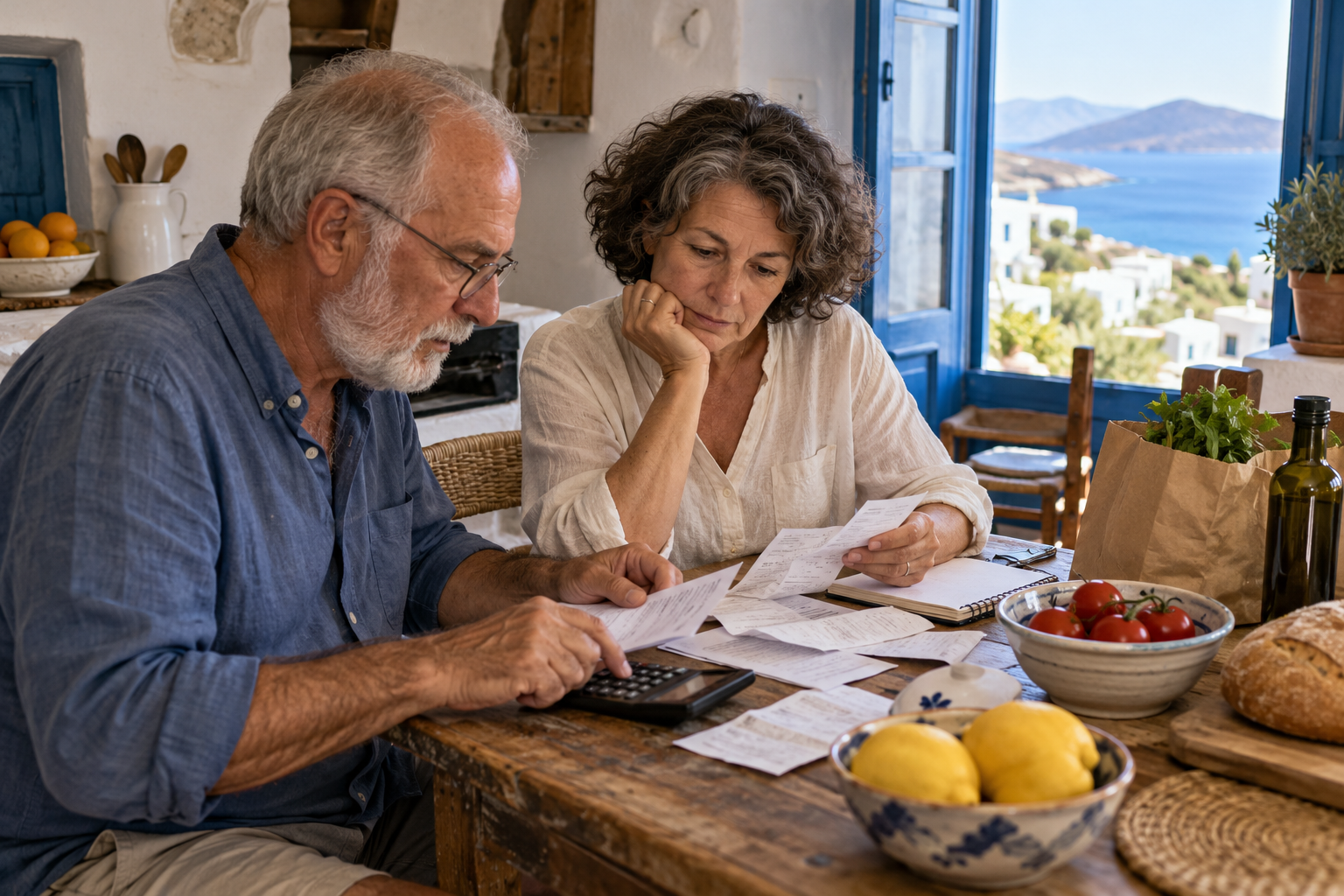
So when the Harrises added it all up at the end of year one, what had the dream actually cost? Far more than the headline, is the honest answer. Stack the purchase price, the roughly ten percent in buying costs, the renovation that rivaled the price of the house, a full year of island-premium living and utilities, the ENFIA and municipal taxes, and the American healthcare and tax costs, and the real first-year total landed well above the romantic figure, by a wide margin. The whitewashed house on the blue bay was entirely real and genuinely wonderful, everything they had hoped, but it was also a considerably more expensive proposition than the photos ever hinted at, and a couple who had budgeted only for the seductive dream number, without the renovation, the premiums, the taxes, and the American costs, would have been in genuine financial trouble by the end of year one. The gap between the two budgets is exactly where the heartbreak lives.
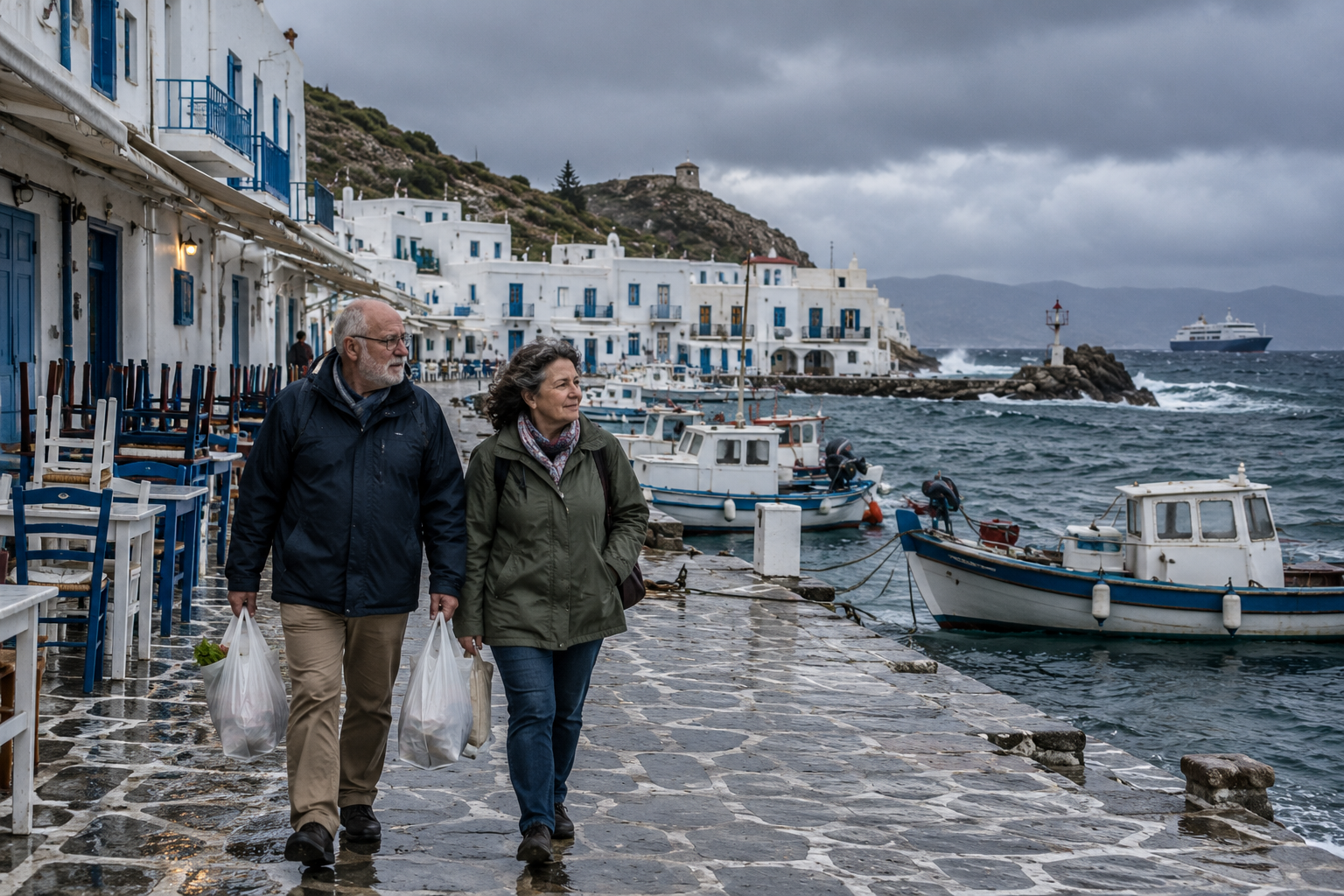
And there is one more cost that is not financial but matters enormously: the winter. The Greek island in a magazine is always in golden summer light, but many islands empty out dramatically once the season ends, with restaurants and shops shutting, ferry service thinning, the expat and tourist crowds gone, and the community contracting to a small core of hardy locals through cold, windy, sometimes isolating months. For some retirees that off-season quiet is exactly the slow, authentic, local life they came looking for, and they treasure it; for others it is a genuinely lonely shock, a gray and windswept version of the island that the sun-drenched summer fantasy never once prepared them for, and it is a surprisingly common reason people who moved to a tiny island end up leaving within a few years. The island has two faces, and you really need to have met the winter one before you commit.
This is why, for American retirees specifically, the larger, year-round islands with real infrastructure, airports, hospitals, and a functioning winter economy tend to work far better than the tiny picture-perfect ones. The honest bottom line is that a Greek island retirement can absolutely be wonderful and worth every euro, but only if you budget for the real all-in cost, which is well above the brochure, choose an island that works in February and not just in July, and go in clear-eyed about the premiums, the taxes, and the quiet of the off-season. The Harrises, in our composite, love their life and would do it again, but they are the first to tell you that the island budget nobody shows you is the one that actually matters.

About the Author: Ruben, co-founder of Gamintraveler.com since 2014, is a seasoned traveler from Spain who has explored over 100 countries since 2009. Known for his extensive travel adventures across South America, Europe, the US, Australia, New Zealand, Asia, and Africa, Ruben combines his passion for adventurous yet sustainable living with his love for cycling, highlighted by his remarkable 5-month bicycle journey from Spain to Norway. He currently resides in Spain, where he continues sharing his travel experiences with his partner, Rachel, and their son, Han.