There is a small, universal moment of American indignation that plays out in train stations and public squares across Europe every single day. A traveler, bladder full and patience thin, spots a public restroom, walks toward it with relief, and then discovers a coin slot, a turnstile that will not turn, or an attendant with a tray of coins, and the realization lands with a small thud: you have to pay to pee. The relief curdles into indignation in about one second flat. For an American raised on the idea that a public toilet is a basic free right, this feels like an outrage, a nickel-and-diming of the most undignified kind, and the complaint is always the same, that they are being charged more than a dollar simply to answer nature’s call.
But the Europeans standing in the same line are not outraged at all, because to them the fifty cents or the euro is not a scam. It is the price of something the American system mostly fails to provide. Here is why European public toilets cost money, where the American outrage actually comes from, the one real catch worth knowing, and the genuinely persuasive case that you are, in fact, paying for exactly the right thing. By the end, the coin slot may even start to look like the smarter system.
What follows is the shock itself, where the free-toilet expectation came from, what the fee actually buys, why Europe has more toilets rather than fewer, and how to handle it like a local.
The Shock at the Coin Slot
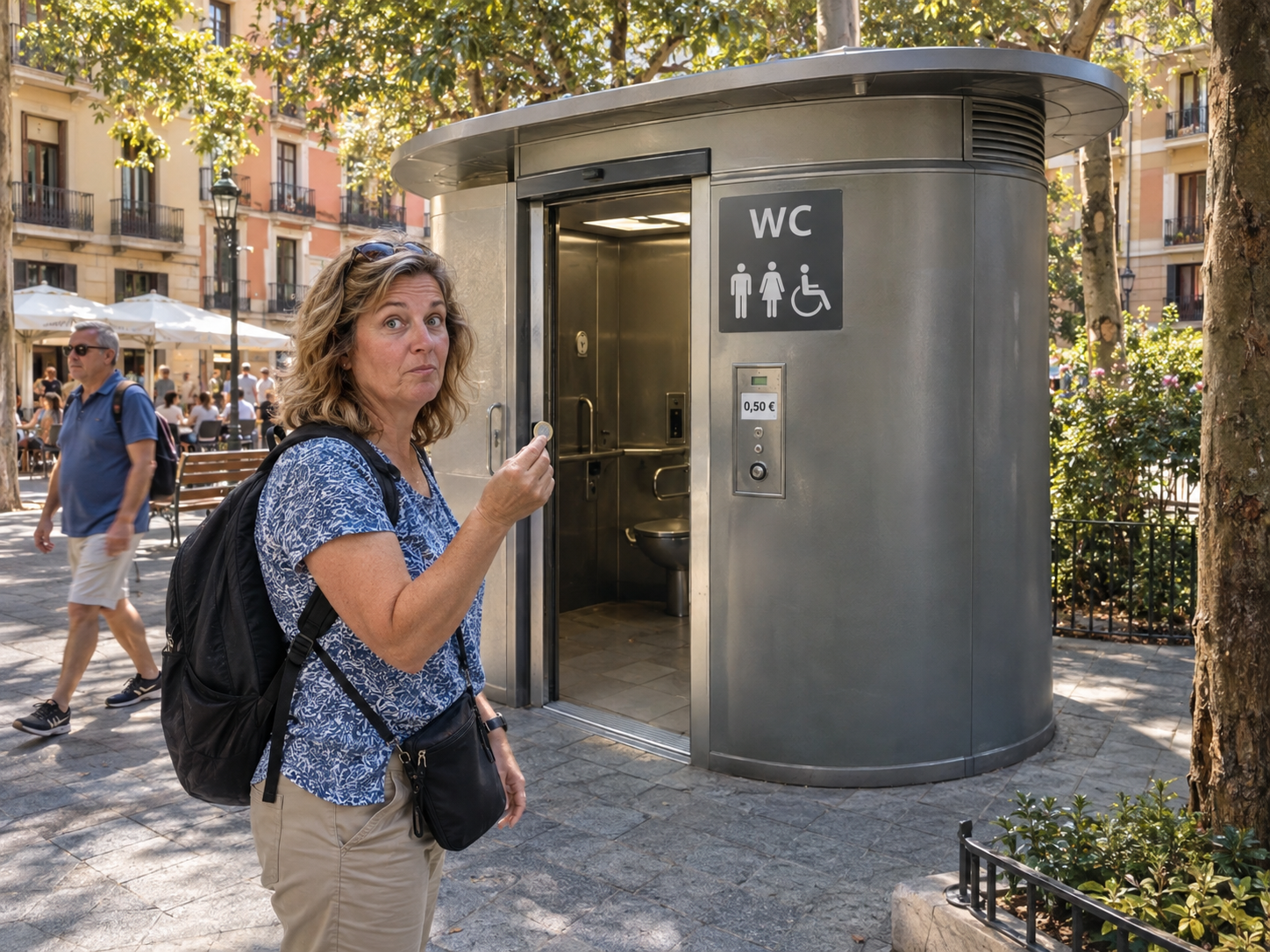
The scene is familiar to anyone who has traveled in Europe. In Germany, France, Italy, the Netherlands, Austria, and much of the rest of Western and Central Europe, a great many public toilets, in train stations, department stores, highway rest stops, public squares, charge a fee to enter, typically between fifty cents and a euro, occasionally more. Sometimes you pay at a coin-operated turnstile that will not budge without the right coin, sometimes to an attendant sitting at the entrance with a dish of coins and a watchful eye, famously the Dame Pipi of France and Belgium, sometimes into a slot on a gleaming automated booth, and in Germany you may even pay at a rest stop and receive a voucher to spend in the shop. The forms are endless; the fact of payment is not. The systems vary, but the principle is constant: access costs money, and no change is given, so you had better have the right coins.
For the American, this collides head-on with a lifelong assumption. In the United States, the public restroom is treated as a free baseline, an unspoken civic given, something you simply walk into, in a store, a restaurant, a gas station, a mall, without anyone asking for payment or even thinking it strange that you did not. The idea of a coin slot on the door would strike most Americans as faintly dystopian. So the European coin slot reads as an affront, a petty charge for a bodily necessity, and the indignation is real and immediate.
More than a dollar to use the bathroom, the American fumes, doing the exchange-rate math in disbelief. The feeling is that something that ought to be free has been cynically turned into a transaction, and that the traveler, already out thousands of dollars on the trip, is being squeezed for loose coins at the most vulnerable, least dignified possible moment. It is the pettiness of it, as much as the money, that stings. It feels, in a word, wrong. The interesting part is that the European in line behind them feels nothing of the kind.
Where the Free-Toilet Expectation Came From
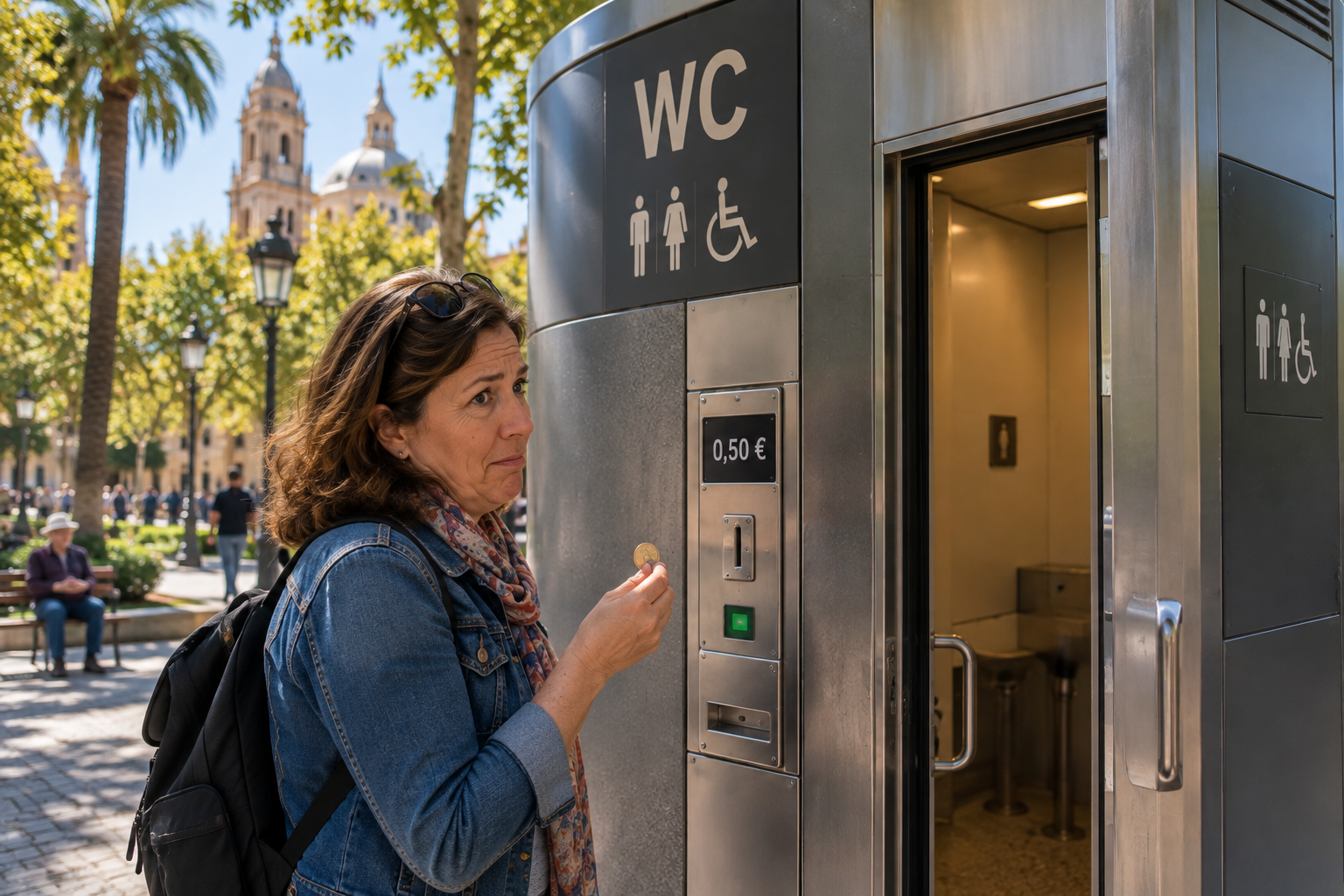
The American sense of outrage is not random; it has a specific history, and knowing it helps explain why the two continents see this so differently. Pay toilets were once common in the United States too, right up until the 1970s, when a movement actually formed to abolish them. activists founded the Committee to End Pay Toilets in America, arguing that charging for a basic necessity was undemocratic and unfair, particularly to those who could least afford it, and they succeeded almost completely, driving pay toilets out of American life within a few years and cementing, for every generation since, the deep expectation that a public restroom should simply be free. It is now so ingrained that most Americans have no idea it was ever a live political question at all.
So an American does not merely prefer free toilets; they grew up in a country that made a deliberate political decision that toilets should be free, and that history is baked into the reflex of outrage at a European coin slot. Europe simply never had that movement and never made that choice. It kept the older arrangement, in which a public toilet is a service that costs money to provide and therefore costs money to use, run not as a free public right but as a small business or a maintained public amenity. Neither approach is obviously right, and both have a coherent logic behind them, but they produce completely different gut instincts, and the clash of those instincts is exactly what is happening, silently, at the turnstile when the American bristles and the German does not. Two histories meeting at a coin slot. The American is not being unreasonable by their own history; they are just applying the rules of a country that abolished the very thing they are now standing in front of.
What the Fee Actually Buys
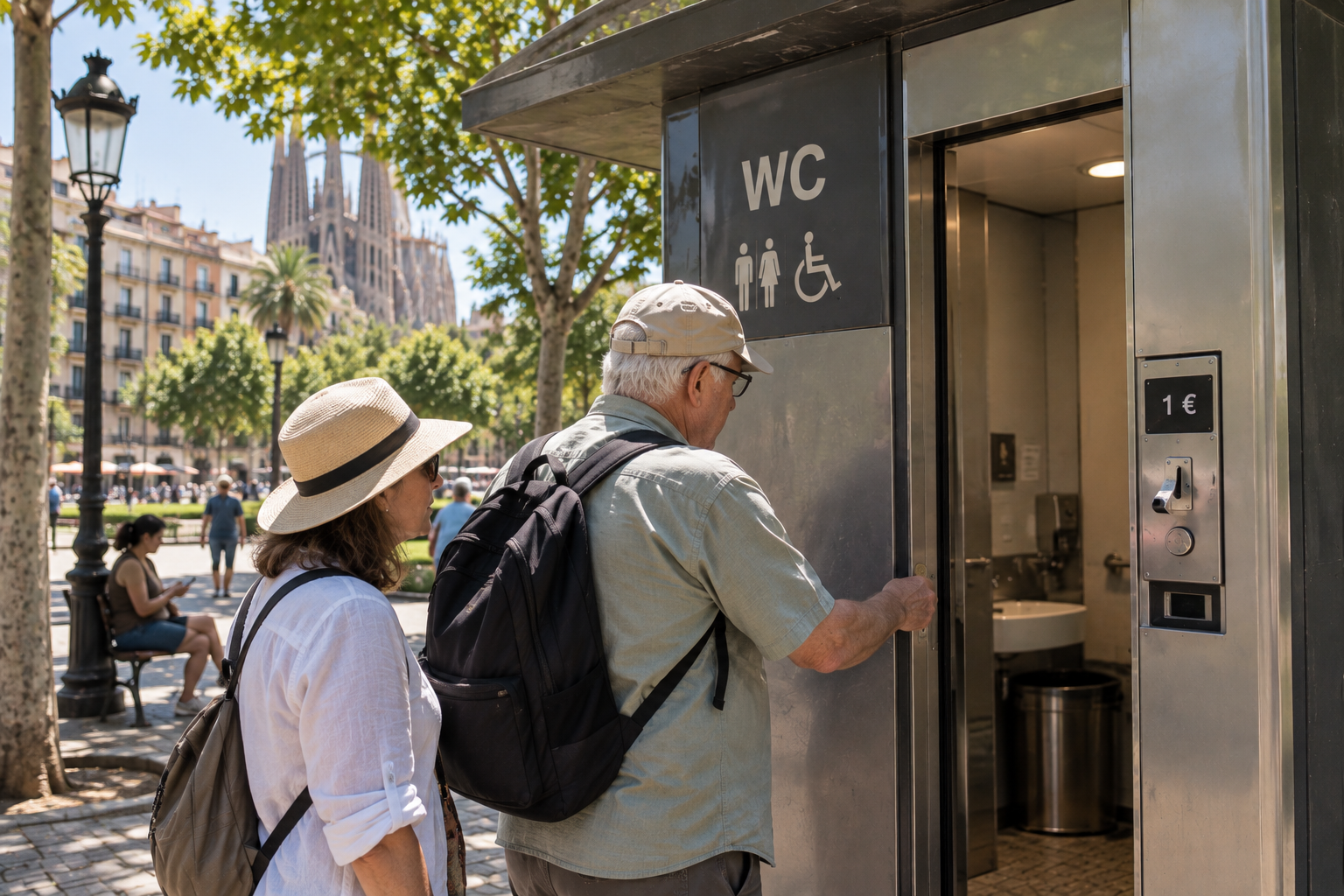
Here is the case the Europeans would make, and it is more persuasive than the fuming traveler wants to admit: the fee buys cleanliness, and cleanliness is not free. That fifty cents or euro does not vanish into a corporation’s pocket; it pays for the thing an American restroom so often lacks: maintenance. It funds the attendant who, in many places, cleans the stall after each and every use, the supplies that mean there is reliably soap, paper, and a working hand dryer, the upkeep that keeps the fixtures functioning and the floor dry and the whole place smelling of disinfectant rather than neglect. Somebody has to pay that person and buy those supplies, and in the European model, that somebody is you, at the moment you benefit. European pay toilets are, as a direct result, generally clean, well-stocked, and modern, and in many cases genuinely pleasant, a world away from the grim, under-maintained free public restroom that is a familiar American experience.
This is the heart of the reframe. The American is outraged at paying for something they think should be free, but what they are actually paying for is a clean, stocked, functioning, dignified toilet, which is not the same product as the free American one at all. Ask anyone who has gone looking for the free restroom in a busy American bus terminal or subway station, often locked, broken, filthy, out of order, or simply nowhere to be found, and the calculation shifts in a hurry. Free is not much of a bargain when free means unusable or nonexistent.
Fifty cents for a toilet you would actually want to use starts to look less like a scam and more like a bargain, an honest price for an honest service. The money is not the cost of being allowed to pee; it is the cost of the restroom being clean when you get there. Framed that way, the attendant with the tray is not a toll collector shaking you down but the entire reason the place is worth walking into, the person standing between you and the grim free alternative, and tipping her a coin even where it is not strictly required, which many seasoned travelers do without thinking, starts to feel less like being fleeced and more like simple fairness to someone doing an unglamorous job well.
Why Europe Has More Toilets, Not Fewer
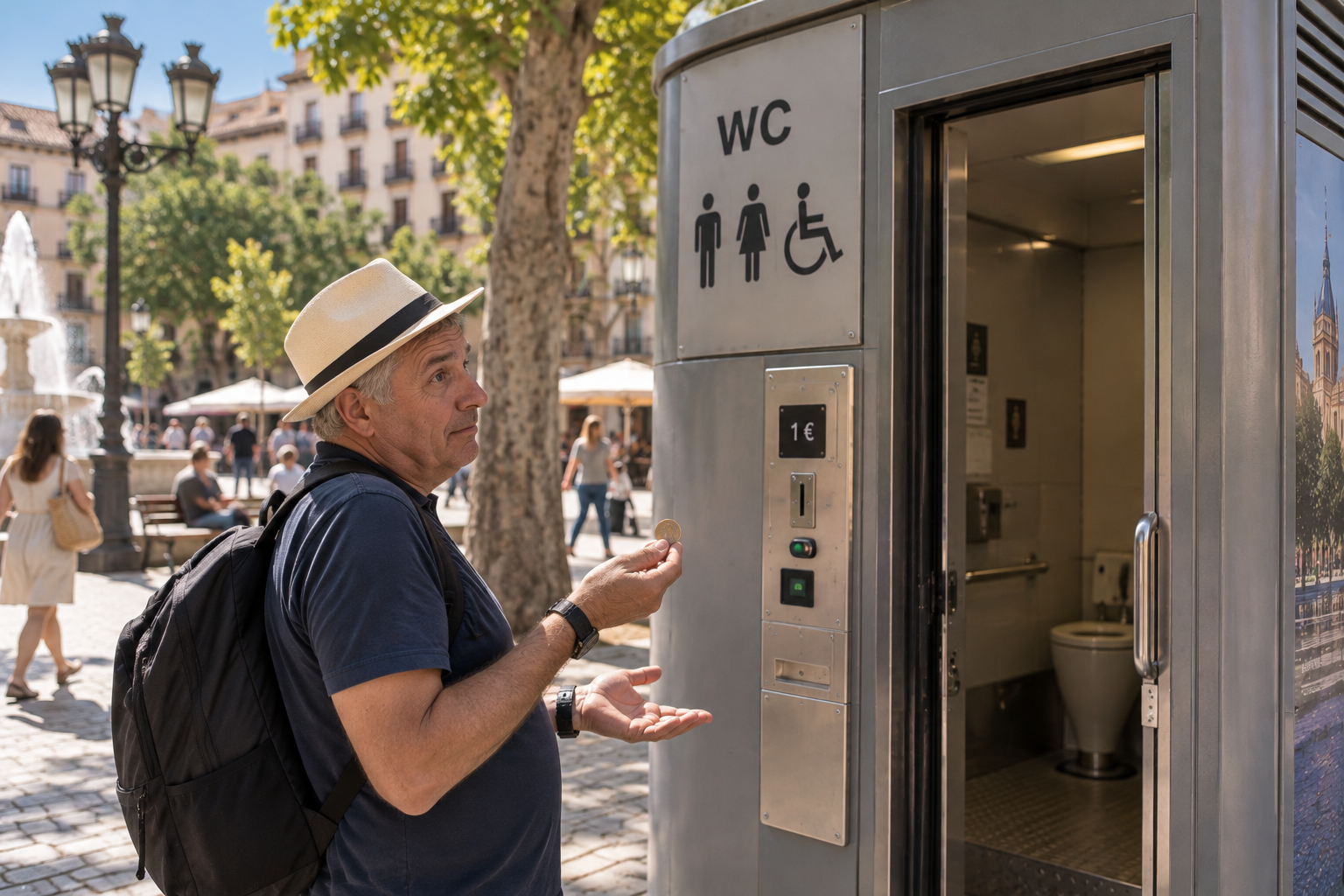
The deepest irony of the American outrage is that the fee does not just buy cleaner toilets; it buys more of them, which is the opposite of what the indignant traveler assumes. Because European public toilets can fund themselves through fees, there is an economic reason for them to exist, and so they exist in far greater numbers than in the United States, where free toilets have no funding model and therefore, very often, simply are not provided at all. The numbers are stark: the US has only a handful of public toilets per hundred thousand people, while much of Western Europe, and countries like Iceland, have many times more.
This turns the whole complaint on its head. The American who resents paying is coming from a country that, by refusing to charge, ended up with dramatically fewer public toilets, so the real American experience is often not a free toilet but no toilet, a desperate hunt for a cafe that will let you in or a store with an unlocked restroom. Europe made the other trade entirely: a small, slightly annoying fee in exchange for toilets that are both genuinely plentiful and reliably clean, available when you need them and pleasant when you find them. Put that way, it is not obvious the Americans got the better end of the deal. Seen in that light, the euro is not the price of a worse deal than America offers; it is the price of a far better one, a system that actually delivers the thing the free model promises but frequently fails to provide. The outrage, in the end, is a traveler from the country with eight toilets per hundred thousand people being annoyed at the country that figured out how to have fifty.
The One Catch Worth Naming
Honesty requires admitting the system is not perfect, because there are a couple of genuine wrinkles that the clean-and-plentiful argument glosses over. The first is a real fairness problem that many have pointed out: in some places, free public urinals for men sit on the street while women must pay an attendant or a turnstile, an imbalance that charges one group for a bodily necessity and not the other. It is a legitimate criticism, the rules are slowly shifting in response, and it is worth knowing that the paid system does not always fall equally on everyone.
The second wrinkle is practical. Not every paid toilet is spotless; the fee makes cleanliness far more likely, not guaranteed, and you will occasionally pay your coin and still find a mediocre stall, which stings more precisely because you paid. And the modern automated self-cleaning booths that some cities use come with their own small trap: they run a powerful wash cycle between users, and travelers who do not understand how they work have been known to get an unwelcome soaking by lingering at the wrong moment, so with those, pay attention to the cycle and do not dawdle. None of this undoes the basic case, which is that paying generally buys you a cleaner and more available toilet than the free American model provides. But the honest version includes the fact that the fee is not magic, the fairness is imperfect, and the occasional euro is wasted on a stall no better than a free one would have been. Knowing that keeps the reframe from tipping over into naive cheerleading for a system that, like all systems, has its flaws.
How to Handle It Like a Local
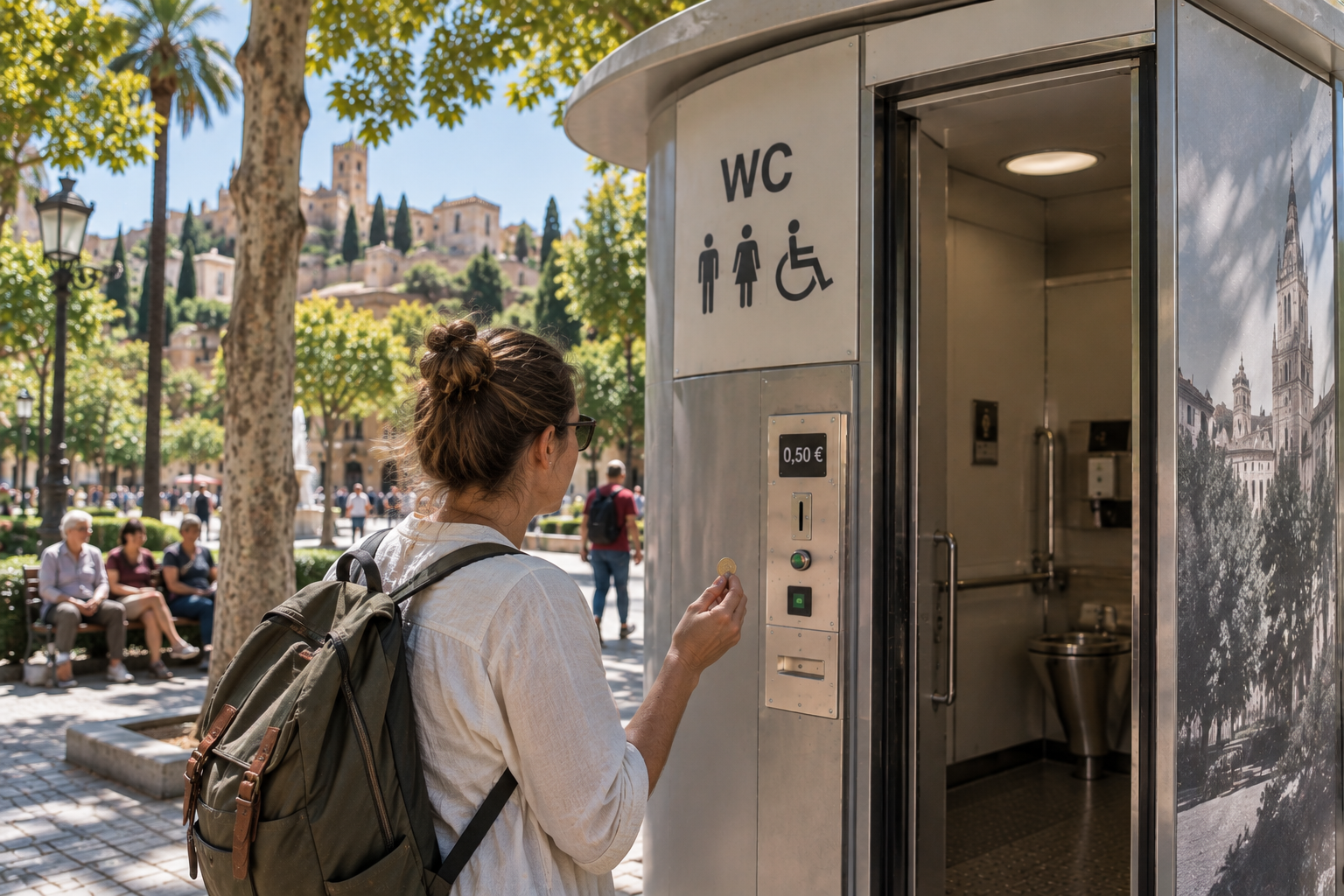
Once the principle clicks, the practice is easy, and a few habits turn the whole thing from an irritation into a non-event. The first and most important is simply to carry small coins at all times, specifically fifty-cent and one-euro pieces, because the single most common way the fee ruins your day is being caught without the right change at the worst moment, and no change is given at a turnstile. Keep a little stash of what travelers half-jokingly call pee coins in an accessible pocket, and the problem mostly disappears.
Beyond that, a few insider moves help. Use the free toilets when you can, because they do exist: museums, where you have already paid admission, almost always have clean free restrooms, as do many large hotel lobbies, and in some countries any establishment serving alcohol is legally obliged to let you use its toilet. Plan ahead and go before you leave anywhere that has a free one, your hotel, a restaurant where you have just eaten, a museum you are exiting, the old parental wisdom to go before you leave the house that turns out to be excellent, money-saving travel strategy in a pay-toilet country.
And when you do pay, or when an attendant has clearly kept the place spotless, drop the coin without resentment, because you now know what it is for. The shift that makes European travel easier is not learning to find free toilets; it is letting go of the outrage and seeing the fee for what it is, a small, fair price for a clean, available place to go, in a system that, for all the indignation it provokes, simply works better than the free one you grew up with. Make your peace with the coin slot, and you have made your peace with one of the small, sensible, slightly counterintuitive truths of European life: that the things worth having, even the most basic and unglamorous ones, usually cost a little something, and that a little something, fairly spent, often buys a great deal more than free ever did.

About the Author: Ruben, co-founder of Gamintraveler.com since 2014, is a seasoned traveler from Spain who has explored over 100 countries since 2009. Known for his extensive travel adventures across South America, Europe, the US, Australia, New Zealand, Asia, and Africa, Ruben combines his passion for adventurous yet sustainable living with his love for cycling, highlighted by his remarkable 5-month bicycle journey from Spain to Norway. He currently resides in Spain, where he continues sharing his travel experiences with his partner, Rachel, and their son, Han.